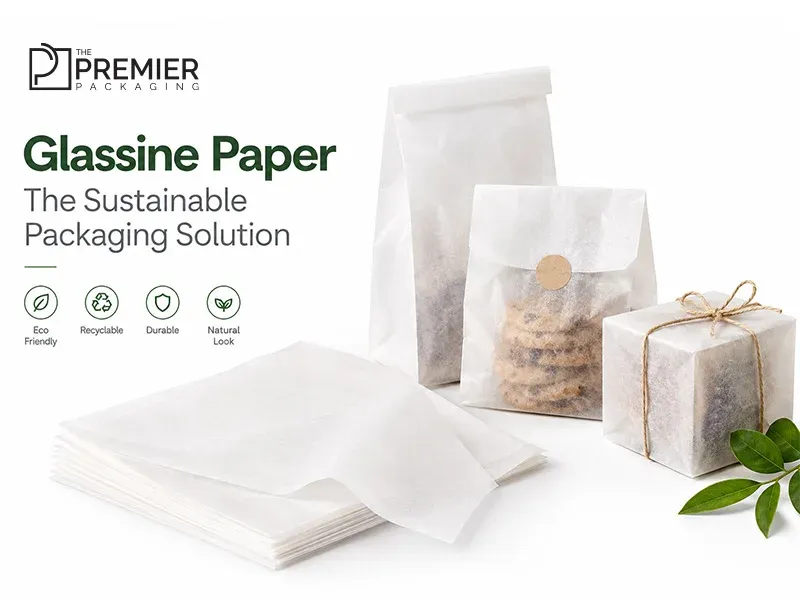
Glassine envelopes are lightweight paper envelopes made from glassine, a dense, smooth, translucent paper made from heavily refined cellulose wood-pulp fibers, then supercalendered under high pressure.
Stamp collectors, archivists, gardeners, and photographers use them to sort and identify:
- stamps
- seeds
- photographic prints
- negatives
- other small, flat items
Glassine resists grease and slows the passage of air and moisture.
It is NOT:
- waterproof
- automatically acid-free
- a recommended long-term enclosure for photographs (according to the Canadian Conservation Institute and the U.S. National Archives)
The TL;DR – Properties of Glassine Envelopes
| Attribute | Detail |
| Material | Glassine paper: cellulose fibers, usually from wood pulp |
| Appearance | Translucent, smooth, glossy |
| Key properties | Grease-resistant, slows air and moisture transfer, lightweight, printable |
| Limitations | Not waterproof, little crush protection, acid-free only when specified |
| Common uses | Stamps, seeds, photographs, negatives, small collectibles |
| Size range | 1¾ × 2¾ in to 8 × 10 in; metric 40 × 40 mm to 325 × 230 mm |
| Archival standard for photos | Photographic Activity Test (PAT, ISO 18916) |
What Is Glassine Paper?
Glassine paper is a cellulose-based paper, usually made from wood pulp. It’s translucent, not transparent.
During manufacturing, the pulp fibers are refined, and the sheet is supercalendered (pressed and smoothed between rollers under high pressure) until it becomes thin, dense, and translucent.
The shape and color of the contents are visible through the sheet, but with less clarity than through tracing paper, made from polyester or polypropylene.
Some manufacturers sell acid-free or pH-neutral glassine, while others apply different treatments or coatings.
Please note that acid-free status, pH neutrality, and archival suitability depend on the manufacturer’s specifications.


Are Glassine Envelopes Waterproof?
No.
Glassine resists some moisture but is not a water barrier. High humidity can deform the paper.
Are All Glassine Envelopes Acid-Free?
No.
Acid-free glassine exists. Acid-free status is a manufacturer specification. It matters whenever the contents are sensitive to acidic materials, but the word “glassine” alone does not confirm that a paper is acid-free, pH-neutral, or suitable for long-term archival storage.
Glassine Envelope Styles
- Open-end: The opening is on the short side. This style is common for stamps and other small, flat collectibles.
- Open-side: The opening is on the long side, which eases insertion and removal of wider items.
- Flap: A flap folds over the opening, and either stays unsealed or uses an adhesive closure.
Other options are:
- center-seam and side-seam designs
- thumb notches
- peel-and-seal closures
- resealable adhesive strips
Glassine Envelope Sizes
Glassine envelopes have no universal standard size range. Suppliers stock set sizes, and manufacturers also produce custom dimensions.
The sizes below come from manufacturer catalogs and show the available range. They are not industry standards because the issue is that there’s no standard glassine envelope size.
Envelope Sizes in Inches
| Envelope size (In) | Application Or Use |
| 1¾ × 2¾ | Stamps and very small flat items |
| 2 × 2 | Small stamps and collectibles |
| 2 × 3¼ | Stamps and small seed quantities |
| 2¼ × 3½ | Small seeds and compact items |
| 2½ × 4¼ | Longer small items |
| 3 × 4½ | Larger flat collectibles |
| 3½ × 3½ | Small square items |
| 4 × 4 | Larger square items |
| 5½ × 5½ | Large flat or square items |
| 4 × 5 | Small photographic prints |
| 5 × 7 | Medium photographic prints |
| 8 × 10 | Large photographic prints |
The 4 × 5, 5 × 7, and 8 × 10 inch photographic sizes are nominal sizes listed by TALAS, a specialist archival supplier.
Because there are many glassine envelope sizes, it begs the question why there are different options available. The reason is application. As discussed before, these envelopes are used for storage or archival purposes for items like photographs, seeds, and stamps. So here’s more context you need to know.
Glassine Envelopes for Photographs
Glassine envelopes are used to sort and separate small photographic prints and negatives. Their translucency allows each print to be identified during handling.
Glassine is not, however, a reliably safe material for long-term photo storage because moisture can cause the photographic emulsion to adhere to the glassine and deform the paper.
To select one for photographs, consider:
- Product dimensions
- Paper specification
- Photographic Activity Test (PAT)
- Seam and closure placement
For valuable photographs or long-term storage, a PAT-verified archival enclosure is a better choice.
Glassine Envelopes for Stamps
Stamp collectors use glassine envelopes to separate individual stamps or small groups and to organize them by country, issue, design, or collection.
The translucent paper shows each stamp’s general appearance without removing it, and the small formats keep items separate during handling.
The Society of American Archivists (SAA) recommends moving loose stamps and stamps held in glassine envelopes into archival stamp stock books or other suitable archival enclosures.
Glassine Envelopes for Seeds
Glassine envelopes are used to separate, identify, and store small quantities of seeds saved from flowers, herbs, and vegetables.
Penn State Extension states that properly dried seeds can be stored in glassine bags, among other containers, when kept in a cool, dry, dark place.
Seed Storage Process
- Drying: Seeds are dried completely because retained moisture can cause mold and loss of germination ability.
- Separation: Each variety goes in its own envelope.
- Labeling: Each envelope records the plant name, variety, and collection date.
- Storage: Envelopes are kept in a cool, dry, dark place.
- Long-term moisture protection: Depending on the seed type and storage conditions, labeled envelopes go inside an airtight outer container.
Glassine vs. Other Specialty Paper
| Other Specialty Paper | Their Difference in relation to Glassine |
| Cellophane | Transparent regenerated-cellulose film, not paper |
| Polyester film (including Mylar, a DuPont Teijin Films brand) | Plastic film with a clearer view of contents; certain grades are used for archival storage |
| Polypropylene | Plastic film used in clear sleeves and envelopes |
| Wax paper | Paper coated with wax; glassine gets its smooth surface from supercalendering and is not necessarily waxed |
| Kraft paper | More opaque and less polished than glassine |
Summary
Glassine envelopes are translucent, lightweight envelopes made from supercalendered glassine paper. They are used to sort and identify stamps, seeds, photographs, negatives, and other small, flat items.
The main selection factors are:
- material specification
- internal dimensions
- opening style
- acid-free status
- intended use
Glassine:
- resists grease but is not waterproof
- is acid-free only when the manufacturer says so
- is a different material from cellophane, polyester (Mylar), polypropylene, wax paper, and kraft paper
That’s it, folks. If you want to further enhance your understanding of Glassine papers, feel free to browse our published resources for general information purposes.
Share on:
Recent Update


Standard Greeting Card Size & Dimensions: A2 vs. A7 & Paper Yield Guide

Everything You Need to Know About Milk Carton Dimensions

Cereal Mascots: List of Cereal Advertising Characters

What Is a Cardboard? A Ridiculously Easy Guide